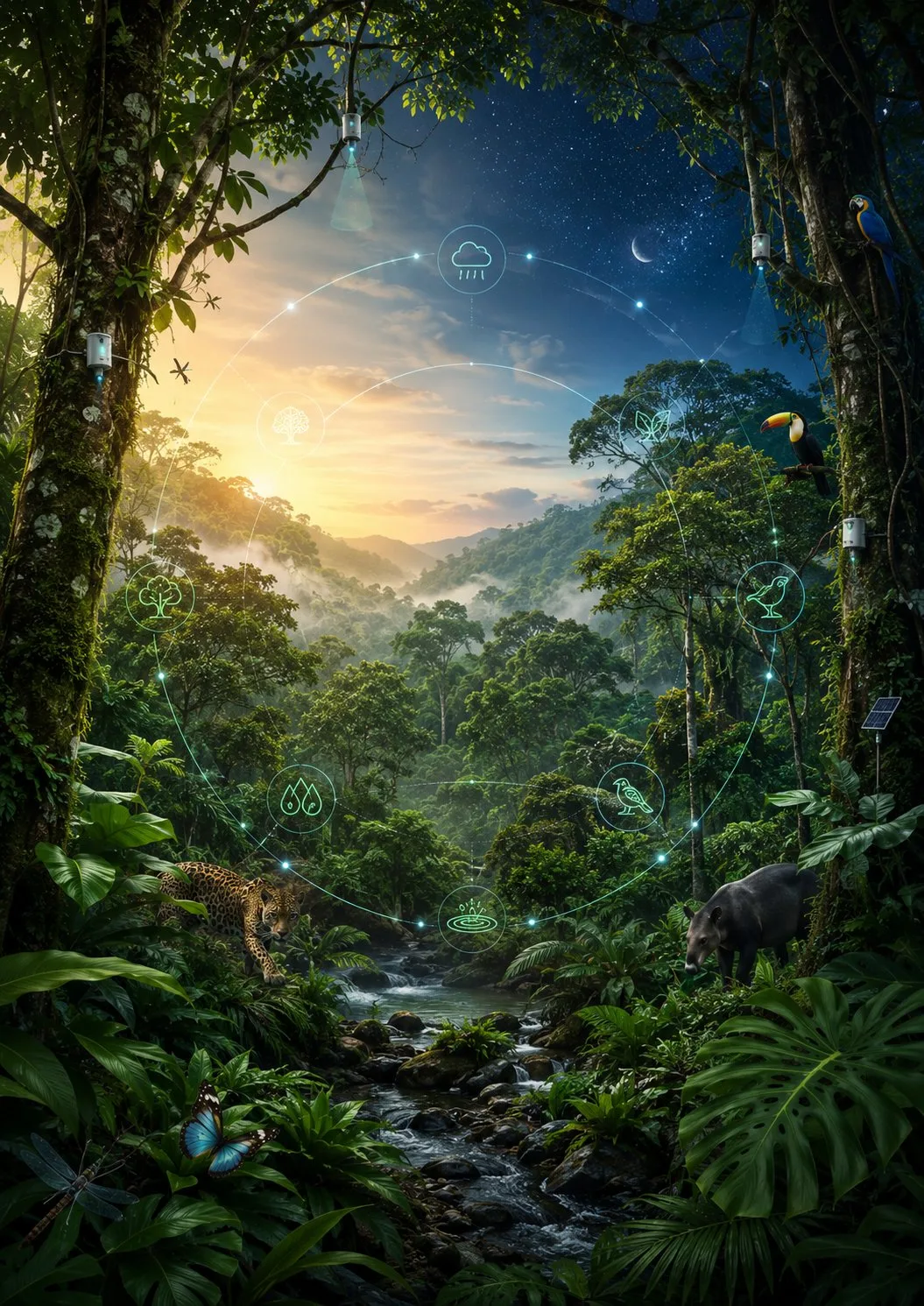
Forests are among the most complex ecosystems to study. Many important changes happen slowly, unpredictably, or within a very short period.
Temperature, humidity, air quality, wildlife activity, soil conditions, water levels, and vegetation changes require continuous observation if researchers want to understand what is really happening.
For decades, one major limitation has been human presence.
Researchers still need to visit sites, take measurements, inspect conditions, collect samples, and return at scheduled intervals. This remains important, but humans cannot be inside the forest all the time.
Technology can change that.
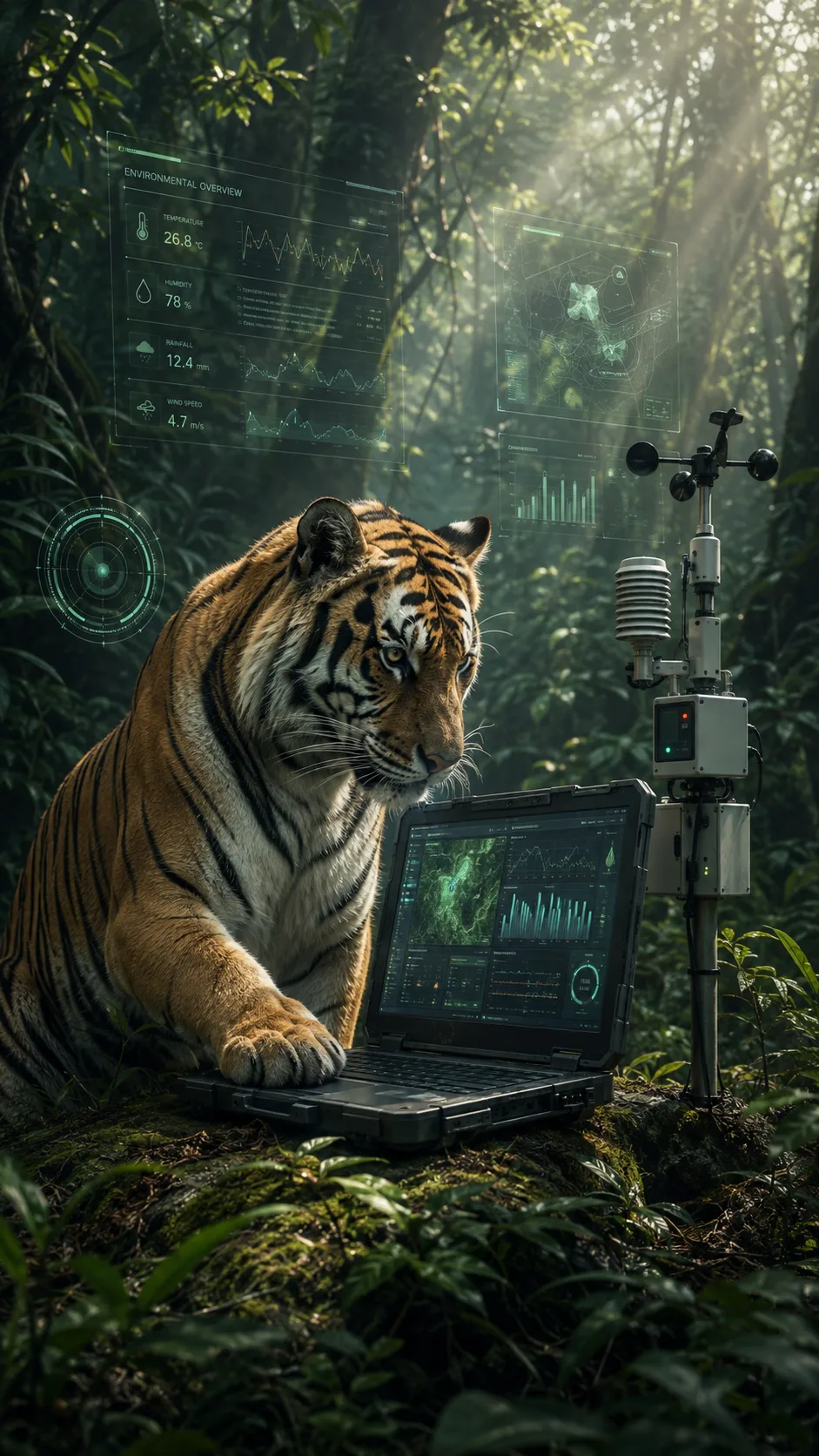
Smart sensors, remote monitoring, satellite data, camera traps, acoustic monitoring, environmental sensing, edge computing, automation, and AI can continuously observe conditions without requiring researchers to be physically present every day.
Data can be collected 24 hours a day.
Systems can record temperature changes at night, detect humidity after rainfall, monitor water levels, capture wildlife sounds, and identify unusual environmental events as they happen.
These events may be missed if research depends only on periodic field visits.
Continuous monitoring gives researchers more than isolated measurements.
It provides history, patterns, relationships, and context.
Researchers can study how ecosystems change over days, months, seasons, and longer periods.
AI can help process large volumes of data, identify anomalies, compare locations, detect patterns, and alert researchers when conditions move outside expected ranges.
But technology should not replace researchers.
It should allow them to spend more time on interpretation, hypothesis development, scientific analysis, validation, and decision-making.
Physical visits will still be needed for sampling, verification, calibration, and specialised inspection.
The difference is that these visits can become more targeted and evidence-driven, rather than routine.
This approach can also reduce disturbance to sensitive environments.
Fewer unnecessary visits mean less movement through habitats, less repeated access, and potentially less disruption to wildlife and natural conditions.
Technology gives us the ability to observe an ecosystem without continuously occupying it.
The goal is not to place more technology inside forests simply because we can.
The goal is to reduce unnecessary human presence while increasing the quantity, continuity, and quality of scientific data available to researchers.
We are moving from a model where:
humans must go into the forest to obtain data
to one where:
the forest can continue producing scientific data even when humans are not there.
That shift could make environmental research more continuous, safer, scalable, and more respectful of the ecosystems we are trying to understand.